


Hey there! As a supplier of Beam Spot Wash Lights, I often get asked about the beam divergence coefficient of these lights. So, I thought I'd take a few minutes to break it down for you.

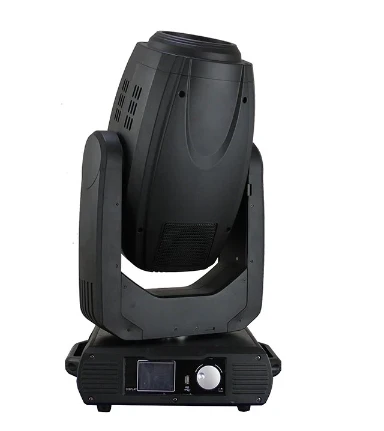
First off, let's talk about what a Beam Spot Wash Light is. These lights are super versatile. They can create a narrow, intense beam like a spotlight, a medium - sized spot, or a wide wash of light. They're used in all sorts of places, from concert stages and theaters to nightclubs and corporate events.
Now, the beam divergence coefficient is a pretty important concept when it comes to these lights. In simple terms, it tells you how much the beam of light spreads out as it travels away from the light source. A lower beam divergence coefficient means the beam stays more focused and narrow over a longer distance. On the other hand, a higher coefficient means the beam spreads out more quickly.
Let's say you're setting up a concert stage. You want to use a Beam Spot Wash Light to highlight the lead singer. If you choose a light with a low beam divergence coefficient, the light will stay concentrated on the singer, even if they're far from the light fixture. This gives a really sharp and clear effect. But if you pick a light with a high coefficient, the beam will spread out a lot, and the light on the singer might look more diffused and less intense.
The beam divergence coefficient is usually measured in degrees. For example, a light might have a beam divergence of 5 degrees. This means that for every unit of distance the light travels, the beam will spread out by an angle of 5 degrees.
When it comes to our products, like the 17r 350w Beam Spot Wash Light, we've carefully engineered the optics to get the right balance of beam divergence. This light is great for those who need a light that can switch between different beam types easily. Whether you want a tight beam for a special effect or a wide wash for general illumination, the 17r 350w can do it.
Our Professional Moving Head Lights also offer a range of beam divergence options. These lights are designed for professional use, so you can trust that they'll perform well in any situation. They're built to last and can handle the rigors of touring and frequent use.
And then there's the 3 in 1 Moving Head. As the name suggests, it combines three functions in one. It can be a beam, a spot, or a wash light. The beam divergence on this light is adjustable, so you can customize it according to your needs.
Now, why does the beam divergence coefficient matter for you as a buyer? Well, it all comes down to the effect you want to achieve. If you're working on a small - scale event, like a local band performance in a small club, you might not need a light with a very low beam divergence. A light that spreads out a bit more can actually create a nice, ambient effect. But if you're working on a large - scale event, like a stadium concert, you'll probably want lights with a low coefficient to ensure that the light reaches the far corners of the venue and stays focused on the performers.
Another factor to consider is the cost. Lights with a very low beam divergence coefficient often use more advanced optics, which can make them more expensive. So, you need to balance your budget with your lighting requirements.
We understand that every event is different, and that's why we offer a variety of Beam Spot Wash Lights with different beam divergence coefficients. Whether you're a lighting designer, an event planner, or a venue owner, we have a light that will suit your needs.
If you're in the market for a Beam Spot Wash Light, I encourage you to think about the beam divergence coefficient and how it will impact your lighting setup. And if you have any questions, our team is here to help. We can provide you with more detailed information about the beam divergence of our different products and help you choose the right light for your project.
So, if you're interested in purchasing our Beam Spot Wash Lights, don't hesitate to get in touch. We're ready to have a chat about your specific requirements and see how we can help you create the perfect lighting effect for your event.
References
- Lighting Design Handbook: Principles and Practices
- Professional Lighting and Sound Magazine articles on moving head lights


