


As a seasoned supplier of Moving Head Beams, I've had countless conversations with lighting enthusiasts, event planners, and professional stage technicians about the capabilities of these remarkable lighting fixtures. One question that often comes up is: "What is the maximum pan and tilt range of a Moving Head Beam?" In this blog post, I'll delve into this topic, exploring the factors that influence pan and tilt range, typical ranges in the market, and how these ranges impact the performance of Moving Head Beams.
Understanding Pan and Tilt in Moving Head Beams
Before we dive into the maximum ranges, let's clarify what pan and tilt mean in the context of Moving Head Beams. Pan refers to the horizontal movement of the light fixture, allowing it to sweep from left to right. Tilt, on the other hand, is the vertical movement, enabling the light to move up and down. These movements are controlled by motors within the fixture, which can be programmed to create dynamic lighting effects.
The pan and tilt ranges of a Moving Head Beam are crucial for creating immersive lighting experiences. A wider range allows for more extensive coverage of the stage or event space, enabling the light to reach every corner and create complex patterns. This is particularly important for large venues or events where a single fixture needs to illuminate a significant area.
Factors Influencing Pan and Tilt Range
Several factors can influence the maximum pan and tilt range of a Moving Head Beam. One of the primary factors is the design and construction of the fixture. High-quality Moving Head Beams are typically built with precision motors and gears that can withstand the stress of continuous movement. These components are designed to provide smooth and accurate pan and tilt movements, allowing for a wider range of motion.
Another factor is the size and weight of the fixture. Larger and heavier Moving Head Beams may have more limited pan and tilt ranges due to the physical constraints of the motors and gears. However, advancements in technology have allowed manufacturers to develop more compact and lightweight fixtures without sacrificing performance. These fixtures can often achieve wider pan and tilt ranges while still maintaining stability and durability.
The type of lighting source used in the Moving Head Beam can also impact the pan and tilt range. LED-based Moving Head Beams, such as our LED Zoom Moving Head Light, are generally more energy-efficient and have a longer lifespan than traditional lighting sources. They also tend to be lighter in weight, which can allow for wider pan and tilt ranges.
Typical Pan and Tilt Ranges in the Market
The pan and tilt ranges of Moving Head Beams can vary significantly depending on the model and manufacturer. In general, most professional-grade Moving Head Beams offer pan ranges of 540° or more and tilt ranges of 270° or more. These ranges provide ample coverage for most stage and event applications, allowing the light to move freely and create dynamic lighting effects.

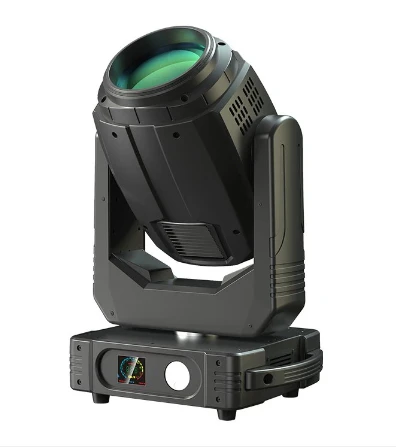
Some high-end Moving Head Beams offer even wider pan and tilt ranges. For example, our Moving Head Light Beam features a pan range of 540° and a tilt range of 270°, providing exceptional coverage and flexibility. This fixture is ideal for large-scale events and productions where a wide range of motion is required.
On the other hand, entry-level or budget-friendly Moving Head Beams may have more limited pan and tilt ranges. These fixtures are typically designed for smaller venues or applications where a wider range of motion is not necessary. However, they still offer a decent level of performance and can be a cost-effective option for those on a budget.
Impact of Pan and Tilt Range on Performance
The pan and tilt range of a Moving Head Beam can have a significant impact on its performance and versatility. A wider range allows for more creative freedom and the ability to create more complex lighting effects. For example, a fixture with a wide pan range can be used to create sweeping beams of light that cover a large area, while a fixture with a wide tilt range can be used to create vertical columns of light or to highlight specific areas on the stage.
In addition to creating dynamic lighting effects, a wider pan and tilt range can also improve the overall efficiency of the lighting system. By allowing the light to reach every corner of the stage or event space, fewer fixtures may be required to achieve the desired level of illumination. This can result in cost savings and a more streamlined lighting setup.
However, it's important to note that a wider pan and tilt range does not necessarily mean better performance. Other factors, such as the quality of the motors and gears, the brightness and color accuracy of the lighting source, and the ease of programming and control, also play a crucial role in determining the overall performance of a Moving Head Beam.
Choosing the Right Pan and Tilt Range for Your Needs
When choosing a Moving Head Beam, it's important to consider your specific needs and requirements. If you're working in a large venue or event space, you may want to opt for a fixture with a wider pan and tilt range to ensure adequate coverage. On the other hand, if you're working in a smaller venue or application, a fixture with a more limited range may be sufficient.
It's also important to consider the type of lighting effects you want to create. If you're looking to create complex patterns and dynamic lighting displays, a fixture with a wider pan and tilt range may be necessary. However, if you're primarily using the light for general illumination or to highlight specific areas on the stage, a fixture with a more limited range may be adequate.
In addition to the pan and tilt range, you should also consider other factors such as the brightness, color accuracy, and beam angle of the lighting source, as well as the ease of programming and control. By taking these factors into account, you can choose a Moving Head Beam that meets your specific needs and provides the best possible performance.
Our Range of Moving Head Beams
As a leading supplier of Moving Head Beams, we offer a wide range of fixtures to suit every need and budget. Our 17r Beam Moving Head is a popular choice for its compact size, high brightness, and wide pan and tilt range. This fixture is ideal for small to medium-sized venues and applications, providing exceptional performance and versatility.
We also offer a range of high-end Moving Head Beams, such as our Moving Head Light Beam, which feature advanced technology and exceptional performance. These fixtures are designed for large-scale events and productions, providing wide pan and tilt ranges, high brightness, and a range of advanced features and functions.
Whether you're a lighting enthusiast, event planner, or professional stage technician, we have the Moving Head Beam that's right for you. Our team of experts is available to help you choose the right fixture for your specific needs and to provide you with the support and guidance you need to get the most out of your lighting system.
Contact Us for More Information
If you're interested in learning more about our range of Moving Head Beams or have any questions about pan and tilt ranges, please don't hesitate to contact us. Our team of experts is available to answer your questions and to provide you with the information you need to make an informed decision.
We also offer a range of services, including installation, programming, and maintenance, to ensure that your lighting system is operating at its best. Whether you're a first-time buyer or an experienced professional, we're here to help you create the perfect lighting solution for your event or production.
References
- Lighting and Sound America. (2023). Moving Head Lighting: A Comprehensive Guide.
- Prolight+Sound. (2023). The Latest Trends in Moving Head Beams.
- Stage Lighting Journal. (2023). Understanding Pan and Tilt in Moving Head Beams.


